
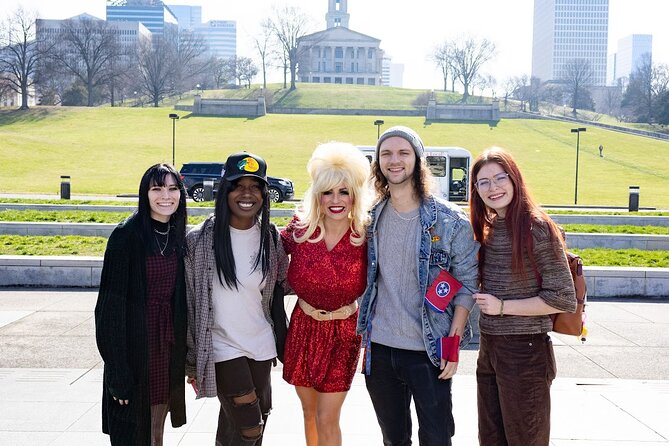
Reviewed · NASHVILLE MUSIC TOURS
Music City Sightseeing Tour by Bus
Nashville’s story is bigger than the neon and honky-tonks of Lower Broadway. This 90-minute tour connects the city’s music business with its Civil War past, suffrage history and civil rights milestones, then rolls out to places such as Music Row and Marathon Village.
I like two things here: the small group of up to 14, which makes it easier to ask questions, and the way a local guide links musicians and historic buildings to the streets you are seeing. One consideration: this is a quick overview, not a hop-on, hop-off ride, and most sights are pass-bys or short stops. Don’t count on going inside the attractions.
At a glance
- Small van group: Maximum 14 people, with air conditioning and broad windows.
- A music-minded route: See Printer’s Alley, Music Row and Marathon Village, along with downtown landmarks.
- Local commentary: Guides such as Larry and Joe Nashville connect the city’s past with its recording and performance scenes.
- Mostly outside visits: The schedule includes brief stops, but most attractions are viewed from the vehicle.
- A short orientation: About 90 minutes, starting and ending at 520 Commerce Street.
- $47.99 per person: A practical choice if you value local context more than attraction admissions.
A compact introduction to Music City
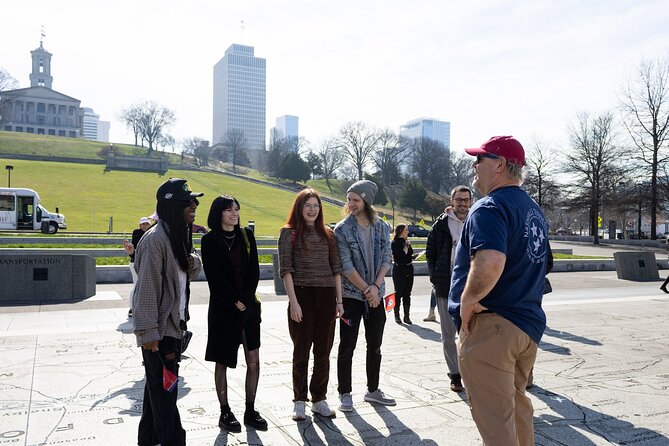
This tour is best understood as a guided orientation, not a deep visit to any one museum or neighborhood. In an air-conditioned vehicle, you cover a lot of ground in about an hour and a half, while a local guide supplies the connections that can be hard to spot on your own: why a printing district became an entertainment district, how Nashville’s recording business grew, and how the city’s civic history shaped its identity.
The van holds no more than 14 people. That matters in a city where large sightseeing vehicles can feel impersonal. In a small group, you have a better chance to hear the guide, ask a follow-up question and get a tour tailored to the group’s interests. Past groups have sometimes been smaller still, which allowed for easy conversation. The vehicle has large windows, useful when the route is moving and you want a clear look at buildings without stepping out at every stop.
The tour is offered in English and led by a licensed local guide. Guides named in the experience include Larry and Joe Nashville. Their approach is a key part of the appeal: expect a mixture of city history, music-industry stories, characters and present-day Nashville, rather than a recital of dates and building names.
More music tours in Nashville:
- Discover Nashville City Tour with Entry to Ryman & Country Music Hall of Fame
★ 4.5 · 2,412 reviews - Country Music Hall of Fame and Museum Admission
★ 4.5 · 1,918 reviews - Nashville RCA Studio B & Country Music Hall of Fame Ticket Combo
★ 5.0 · 1,532 reviews
Downtown’s stories go beyond the music
The downtown portion sets up the rest of the ride. Nashville’s early development drew people from the Northeast, Native American communities and frontier-minded settlers. Later, downtown became a center of saloons and business, but its history also includes the women’s suffrage movement and important changes in the civil rights movement.
That broader frame helps explain why the city is more than a country music stop. Music is the best-known part of Nashville’s identity, but the city’s political and social history gives the streets more texture. A guide who can link a location to a person or event makes even a short drive feel useful.
The schedule allows about 30 minutes for downtown. That does not mean a half-hour inside a museum or a long walking tour. The attractions are largely viewed from the vehicle or covered in brief stops, so think of this section as a narrated overview. If you are hoping to spend time on foot around Lower Broadway, make a separate plan for it.
One practical point: a guest who knew Nashville expected more attention to Broadway’s honky-tonks, as well as the Frist Art Museum and Schermerhorn Symphony Center. Those landmarks may not receive the focus you want on this route. If Broadway is your priority, ask about the planned route before booking, or set aside time to explore it independently.
Bicentennial Capitol Mall State Park and the city’s civic side
The ride through Bicentennial Capitol Mall State Park brings a change of pace from downtown streets. The park was built to mark Tennessee’s 200th anniversary and includes a marble historical timeline, an amphitheater, fountains and memorials. It sits beside several city landmarks, including the Tennessee State Museum, the Tennessee State Library, Nashville Farmers’ Market and the Nashville Sounds’ baseball stadium, known for its guitar-shaped scoreboard.
The listed stop is about 15 minutes. That is enough to take in the scale of the park and get a sense of its layout, but not enough for a thorough visit to all the nearby institutions. Admission is not included, and the tour does not go inside the sites. If one of the museums is high on your list, plan a separate visit rather than hoping to fit it into this ride.
This stop is valuable because it shifts the story from studios and performers to Tennessee’s public history. It also gives you a glimpse of a large outdoor space that is easy to miss when your attention is fixed on downtown nightlife.
Printer’s Alley: from presses to performers
Printer’s Alley takes its name from the printing and publishing businesses that worked here in the 1800s. During Prohibition, the district became associated with speakeasies, music and nightlife. Its past gives the alley a different character from the polished, bright stretch of Lower Broadway.
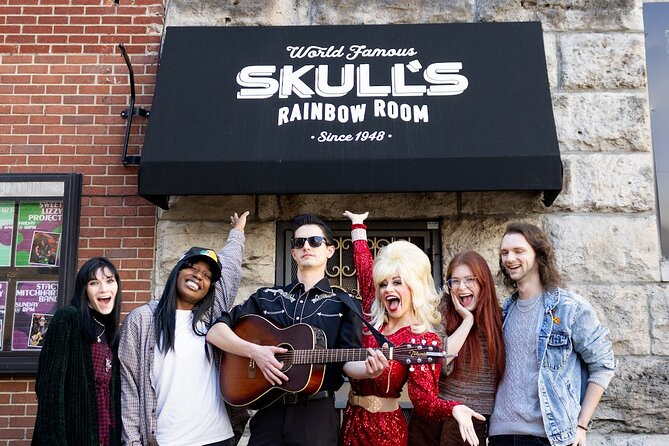
The tour allows about five minutes here. That is a quick look, not time to settle in for a meal or a show. The guide may point out Skull’s Rainbow Room, a long-running Nashville venue, and tell stories about performers associated with the area, including Jimmy Hendrix, Bob Dylan, Sammy Davis Jr., Paul McCartney, Elvis and Johnny Cash.
I like this stop because it makes a useful distinction between Nashville’s better-known music zones. Printer’s Alley has its own history as an entertainment district, shaped by the city’s older downtown and its Prohibition-era businesses. But if you want to experience the alley at night, return later on your own. A brief daytime pass can introduce it, not replace it.
More city sightseeing tours in Nashville:
- Best of Nashville City Sightseeing Tour on Double Decker Bus
★ 4.5 · 2,601 reviews - Explore the City of Nashville Sightseeing Tour by Golf Cart
★ 5.0 · 2,544 reviews - Nashville to Jack Daniel’s Distillery Bus Tour + Whiskey Tastings
★ 5.0 · 1,906 reviews - Nashville “Homes Of The Stars” Narrated Bus Tour with 30+ Celebrity Homes
★ 4.5 · 1,716 reviews
A church and a state Capitol with unusual design
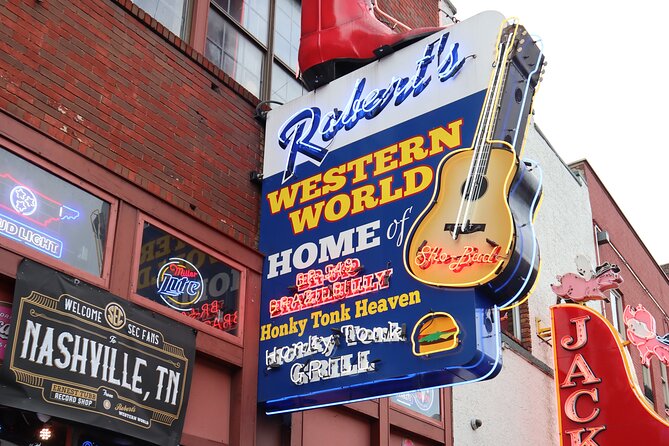
The route also passes a pre-Civil War church built in Egyptian Revival style by architect William Strickland. It served as a Union hospital during the Civil War and is associated with President Andrew Jackson. The exterior is a reminder that Nashville’s architectural history is not limited to the familiar Greek Revival look.
Strickland also designed the Tennessee State Capitol, another landmark on the route. Built in the 1850s, the Greek Revival building survived the Civil War and is unusual among state capitols because it has no dome. Two people are entombed in the building, adding another unexpected detail to a structure that might otherwise register as just another government building from the van window.
These are pass-by sights, so don’t expect to tour either building. Their value is in the guide’s explanation: a few minutes of context can turn a quick glimpse into something you recognize later when you explore downtown on foot.
Marathon Village: an old factory turned creative stop
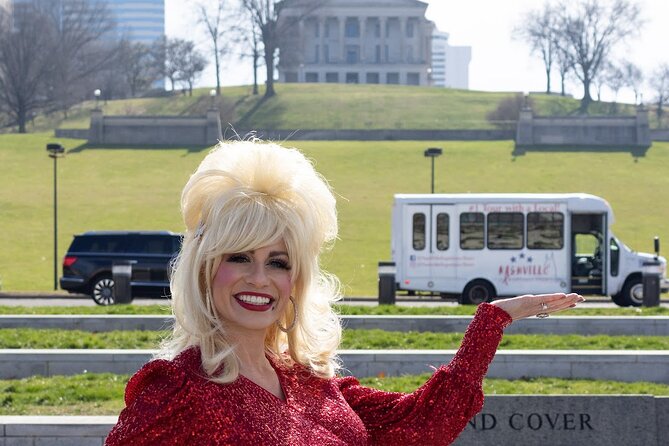
Marathon Village occupies the former Marathon Motor Works complex, an early 20th-century automobile factory. Today, it has shops, a distillery, a brewery, a performance venue and the home of American Pickers. The industrial buildings give this stop a different feel from the city’s newer hotels and entertainment districts.
The itinerary allows about 25 minutes here, making it the clearest chance to step out and explore on your own. Still, the time is limited. You may be able to look around and visit a shop, but don’t assume there is enough time to tour every business or fit in a tasting. The tour does not include food, drinks or attraction admissions.
This stop is a good fit if you enjoy seeing how an old industrial site has been repurposed. It also breaks up the drive with a chance to stretch your legs. The trade-off is that a short visit can leave you choosing between browsing, a drink or a quick look at the complex rather than doing everything.
Music Row explains how Nashville makes music
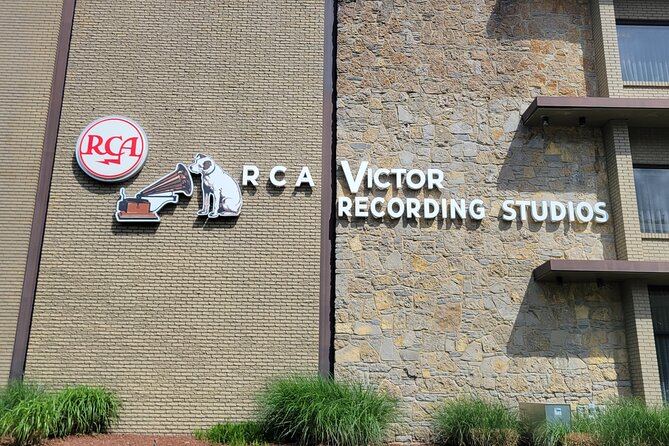
Music Row is not Lower Broadway. It is the district that helped establish Nashville as a recording and publishing center, with studios, record labels, music publishers and songwriter spaces. The tour allows about 10 minutes in the area and ties its buildings to artists who recorded or worked in Nashville, from Bob Dylan and Elvis to Foo Fighters, Tim McGraw, George Strait, Paul McCartney and Johnny Cash.
Most of Music Row’s appeal is in understanding what happens behind the songs. The studios and offices may look quiet from the street, but this is where the city’s music business operates. A guide can make the route more meaningful by connecting particular names and careers to the district, rather than treating it as a list of buildings.
You should not expect to enter a recording studio. This is a drive-through introduction, and the guide’s commentary is the main event. If you are especially interested in the recording industry, use the tour to get your bearings, then research which sites you can visit separately.
The newer side of town, and what the route may miss
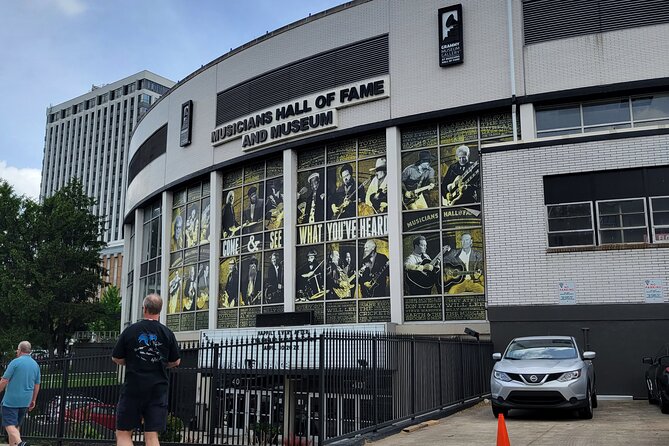
The itinerary also includes an upscale area described as a mix of old and new, with shops, restaurants, hotels and rooftop bars, alongside a Nashville landmark called the Bluegrass Inn. It offers a glimpse of the city’s newer dining and entertainment scene, as well as a contrast with the older downtown streets.
The tour’s 90-minute limit means it cannot give every neighborhood equal attention. One family found the short stop at Marathon Village too brief for a whiskey tasting, and another wished the route had spent more time on Broadway and called out the Frist and Schermerhorn. These are fair reminders to match your expectations to the format: the tour gives you a broad sample, not a complete checklist of Nashville.
That limitation is also part of the value. If you have only just arrived, a concise overview can help you decide which areas deserve a longer visit. If you already know the city well, you may want to ask the guide in advance about specific interests and what the route is likely to cover.
Is $47.99 a fair price?

At $47.99 per person, you are paying for a 90-minute guided ride, a small group and a local guide, not admission to museums or attractions. No food or drinks are included. The price makes the most sense if you want a comfortable orientation and value the stories that connect places across the city.
It is less compelling if your main goal is to enter several attractions or spend substantial time walking. The itinerary lists free admission for its outdoor stops, but the tour does not take you inside the sites. You will need separate time and, where applicable, separate admission for museums and other attractions.
The small group is a meaningful part of the price. With a maximum of 14, you get a more personal setting than a large bus tour, and the guides have shown a willingness to answer questions and adjust their focus to the group. One past group was picked up at a hotel when the van’s air conditioning failed and the guide used a private car instead. That is an example of a guide working around a problem, not a service you should assume is included.
The tour is booked, on average, about 10 days ahead, so it is worth checking availability early if your dates are fixed. The meeting point is 520 Commerce Street, and the activity returns there. Confirmation is provided when you book. Service animals are allowed, most people can participate, and the tour requires good weather and a minimum group size. You can cancel for a full refund up to 24 hours before the start time.
Who should take this Nashville tour?
I would choose this ride if it is your first visit and you want a fast, human-scale introduction before exploring on your own. It suits couples, families and small groups who enjoy local stories and want to see more than the downtown entertainment strip. The air-conditioned vehicle is also a practical way to cover several districts without making the whole outing a long walk.
It is a weaker match if you want a full Broadway experience, entry to museums, extended time at each stop or a detailed visit to recording studios. The route is built around seeing and hearing, not touring interiors. You can get a useful sense of Nashville’s layout and history, but you will need to make your own plans for the places you want to explore in depth.
Should you book it?
Book the Music City Sightseeing Tour if you want a short, small-group overview that connects Nashville’s music business with its civic and architectural history. The strongest reasons to go are the local guide, the limited group size and the mix of districts, from Printer’s Alley to Music Row and Marathon Village.
Before you reserve, decide what you most want to see. If Broadway’s honky-tonks are the priority, ask whether the route includes them, and plan a separate visit if not. If you are happy with a guided introduction and brief stops rather than attraction visits, $47.99 is a reasonable way to get oriented.
FAQ
How long is the Music City Sightseeing Tour?
The tour lasts approximately 90 minutes.
How much does the tour cost?
The listed price is $47.99 per person.
Where does the tour start and end?
It starts at 520 Commerce Street, Nashville, Tennessee, and returns to the same meeting point.
How many people can join the tour?
The maximum group size is 14 people.
What language is the tour offered in?
The tour is offered in English.
Are attraction admissions included?
No. The tour includes no admission fees, and there are no stops that require admission. Most attractions are viewed from the vehicle or during brief stops.
Are food and drinks included?
No. Food and drinks are not included.
Can I cancel for a refund?
You can cancel for a full refund if you cancel at least 24 hours before the experience starts. Cancellations made less than 24 hours before the start time are not refunded.
Just added in Nashville
- Night-Time Hayride Sightseeing Tractor Tour of Nashville★ 4.5 · 9 reviews
- Private Open Air Party Bus with DJ & Bartender 21+★ 5.0 · 27 reviews
- Nashville Jubilee: Country Music & Comedy Show★ 4.0 · 3 reviews
- Nashville Live Music Bar Crawl with Local Venues & Drink Specials★ 4.5 · 13 reviews
- Nashville Photoshoot Experience in the Gulch★ 4.5 · 7 reviews
- Nashville Ghost Hunt: Music City’s Paranormal Investigation Tour★ 4.0 · 20 reviews
- East Nashville Neighborhood E-bike Tour★ 5.0 · 14 reviews
- Nashville Haunted Hearse Ghost Tour 1 Hour Shared★ 4.0 · 50 reviews
Nashville Music Tours, compared.
Discover Nashville City Tour with Entry to Ryman & Country Music Hall of Fame
Read our review →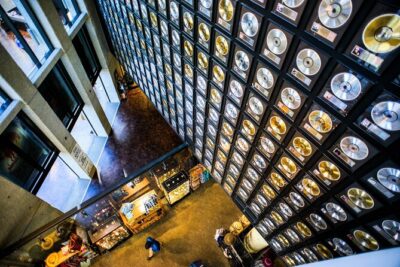
Country Music Hall of Fame and Museum Admission
Read our review →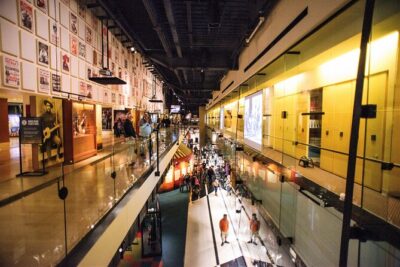
Nashville RCA Studio B & Country Music Hall of Fame Ticket Combo
Read our review →
Nashville Rollin Jamboree Comedy & Country Music Sing-Along Tour
Read our review →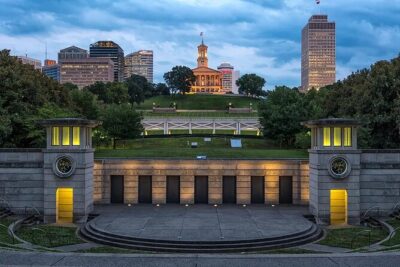
“Murder in Music City” Night-Time Ghost Walking Tour of Nashville
Read our review →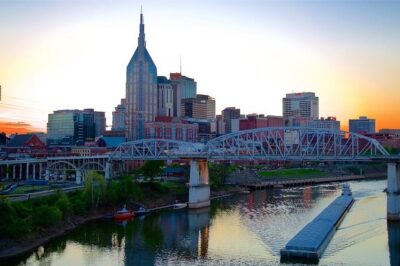
Nashville VIP Style Private Tour with Local Singer-Songwriter
Read our review →
Nashville to Memphis Daytrip with Graceland VIP Tour and Sun Studio Admission
Read our review →
Browse the lists this tour appears in